get_order_number(); $email = $order->get_billing_email(); $country = $order->get_shipping_country() ?: $order->get_billing_country(); $delivery_date = date( 'Y-m-d', strtotime( '+5 days' ) ); // estimate 5 days, adjust as needed $gtin = '9781291779493'; // your ISBN without hyphens ?> add_action( 'woocommerce_thankyou', 'add_google_reviews_optin' ); function add_google_reviews_optin( $order_id ) { $order = wc_get_order( $order_id ); if ( ! $order ) { return; } $order_num = $order->get_order_number(); $email = $order->get_billing_email(); $country = $order->get_shipping_country() ?: $order->get_billing_country(); $delivery_date = date( 'Y-m-d', strtotime( '+5 days' ) ); $gtin = '9781291779493'; ?>

Author: Chukwuemeka Paul Ibekwe

  • SPECULATIVE REPAIR – WEEK 8:                       THE ABURI ACCORD

    SPECULATIVE REPAIR – WEEK 8: THE ABURI ACCORD

    Subtitle: A Promise Made in Ghana, Broken in Lagos

    🔥 TRENDING TOPIC HOOK:

    In January 1967, Nigeria’s military leaders met in Aburi, Ghana. They agreed on a confederal system that could have saved the country. Then General Gowon returned to Lagos and changed the agreement. The war became inevitable.

    📜 HISTORICAL FACTS

    THE MEETING

    By early 1967, Nigeria was on the brink. The East had become a de facto separate state, with its own civil service, currency, and military. The military leader of the East, Lieutenant Colonel Odumegwu Ojukwu, demanded a return to true federalism before he would accept any central authority.

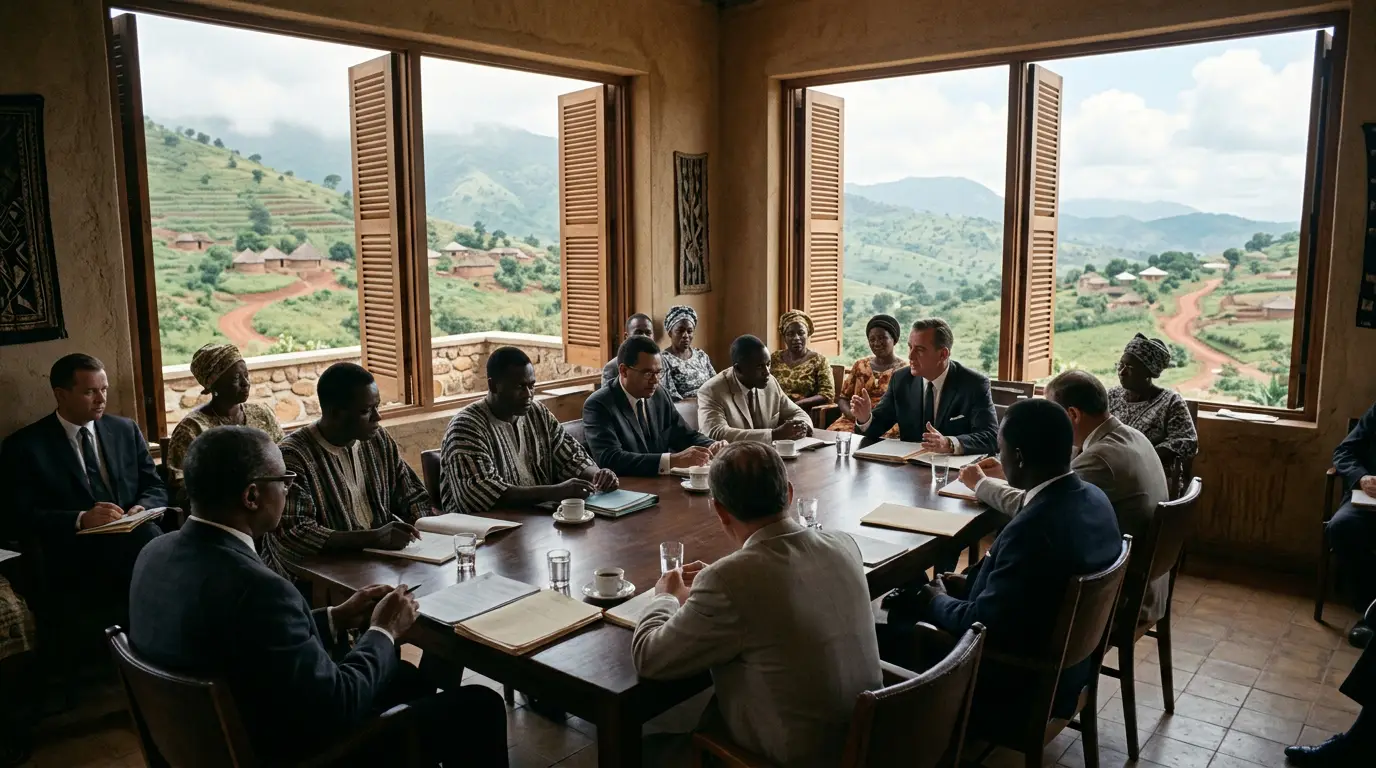
    On January 4–5, 1967, Nigeria’s military leaders met in Aburi, Ghana, under the mediation of Ghanaian General Joseph Ankrah.

    The attendees included:

    -General Yakubu Gowon (new military Head of State, from the North)

    – Lieutenant Colonel Odumegwu Ojukwu (East)

    – Lieutenant Colonel David Ejoor (Mid‑West)

    – Lieutenant Colonel Adekunle Fajuyi’s successor (West – Fajuyi had been killed in July 1966)

    THE AGREEMENT

    The Aburi Accord was a masterpiece of compromise. It agreed that:

    1. Nigeria would return to a confederal system – the regions would have almost complete autonomy, with the center only handling defense, foreign affairs, and customs.

    2. Each region would have its own police force.

    3. The federal government would have no power to declare a state of emergency in a region without the region’s consent.

    4. Military units would be decentralized – no more concentration of Northern troops in the East.

    Ojukwu left Aburi elated. He believed the war had been avoided. Gowon returned to Lagos and gave a press conference calling the Aburi decisions a “very great success.”

    THE BETRAYAL

    But then Gowon changed his mind. Under pressure from Northern officers and civil servants, he issued Decree No. 8 (March 1967), which reinterpreted the Aburi Accord.

    The decree said:

    – The federal government could still control regional affairs.

    – The regions would not get their own police.

    – The center retained emergency powers.

    Ojukwu called it a “perfidy.” He said Gowon had “signed one thing and promulgated another.

    “On May 30, 1967, Ojukwu declared the Eastern Region independent as the Republic of Biafra.

    THE VERDICT:

    The Aburi Accord was the last off‑ramp before the war. Gowon’s betrayal of that agreement made the Civil War inevitable. A Nigerian historian once said: “Aburi was a diamond. Gowon turned it into glass and shattered it.”

    🔁 WHAT COULD HAVE BEEN (If We Did It Right)

    THE COUNTERFACTUAL:

    Imagine that Gowon had kept his word. Suppose Decree No. 8 had faithfully implemented the Aburi Accord:

    – True confederalism: each region keeps 90% of its revenue, sends 10% to the center for defense and foreign affairs.- Regional police forces.

    – No federal emergency powers without regional consent.

    – Decentralized military – troops from a region serve only in that region unless all regions agree to a joint operation.

    WHAT WOULD HAVE HAPPENED?

    – No secession. Ojukwu would have withdrawn the Biafran declaration. The East would have stayed within a confederal Nigeria.

    – No war. The 1–3 million civilian deaths would have been avoided. The starvation of Igbo children would not have happened.

    – A peaceful transition to civilian rule. By 1970, the military would have handed over to a civilian government based on the Aburi principles.

    – Nigeria as a model for Africa. A country that resolved its most dangerous crisis through negotiation and kept its word would have been a beacon.

    HOW NIGERIANS WOULD BE BETTER OFF TODAY:

    | Metric | Actual Nigeria (2026) | Counterfactual (Aburi Kept) ||——–|———————-|——————————||

    Civil War deaths | 1–3 million | Zero || Post‑war reconciliation | Incomplete, still festering | Complete by 1975 || Federal control of revenue | ~80% | ~10–20% || Regional development | Uneven, stifled | Each region grows at its own pace || Trust in agreements | Very low | High – promises kept |

    THE HUMAN DIFFERENCE:-

    Your grandmother would not have fled Port Harcourt with only a mattress on her head.

    – Your uncle would not have been a child soldier.

    – The phrase “never again” would be a promise kept, not a slogan.

    – Nigeria would have learned that agreements are sacred – a lesson that would have prevented countless other betrayals (June 12, 1993, etc.)

    Footer Snippet

    ​The Mission:

    If we can’t fix the past, we must redesign the future.​Most people look at Nigeria’s history and see a series of unfortunate accidents. I see a design flaw.​The “Speculative Repair” mantra is built on a simple, radical premise: To solve Nigeria’s current crisis, we must first accept that the country was “manufactured” by colonial architects to favor stability over success and compliance over competence.​

    In this series, we don’t just complain about what went wrong. We perform “Digital Surgery” on our history.

    We ask:​

    What if the 1959 election hadn’t been rigged?

    * What if the regional economic miracles of Michael Okpara and Obafemi Awolowo had been protected instead of sabotaged?

    * What if the North had been allowed to develop at its own pace instead of being forced to “anchor” the rest of the nation?​

    By “repairing” these historical moments speculatively, we find the credible facts and structural solutions needed to build a New Nigerian Federation.​

    Join me every week as we stop mourning the Nigeria that “wasn’t designed to succeed” and start building the one that is.

    The Six Geopolitical Zones must become the new centers of power, leaving Abuja as a mere “Manager of the Common Room.”

    Closing Statement:

    Nigeria was not designed to succeed, but we are the designers now. The ghost of 1960 only haunts us because we refuse to turn on the light.

    NEXT WEEK: Issue #9 – The Creation of States (How Federalism Was Destroyed)

  • SPECULATIVE REPAIR – WEEK 7: THE JULY 1966 COUNTER‑COUP & THE POGROMS

    SPECULATIVE REPAIR – WEEK 7: THE JULY 1966 COUNTER‑COUP & THE POGROMS

    Forked road splitting into dark forest path and sunlit valley path with signposts
    A fork in the road at sunrise offers a choice between a dark path and a bright path.

    Subtitle: How a Failed Repair Became a Massacre

    🔥TRENDING TOPIC HOOK:

    The January 1966 coup was a failed repair. The July counter‑coup was not a repair – it was revenge. And the pogroms that followed were genocide. This is the week Nigeria lost its soul.

    📜 HISTORICAL FACTS

    THE CONTEXT

    After the January 15, 1966 coup, General Johnson Aguiyi‑Ironsi (an Igbo) took power. He was a professional soldier, not a politician. But his first major decision was disastrous: on May 24, 1966, he issued Decree No. 34, which abolished the federal system and turned Nigeria into a unitary state.

    The regions were gone. The North, which had enjoyed autonomy under federalism, was now to be governed directly from Lagos.

    Northern officers and politicians saw this as an Igbo takeover. The North had lost its leaders (Ahmadu Bello was killed in the coup). Now it was losing its political structure. Resentment boiled.

    THE COUNTER‑COUP

    – JULY 29, 1966 led by Lieutenant Colonel Murtala Muhammed (a Northerner) and Major Theophilus Danjuma, Northern officers struck in the early hours of July 29.

    They assassinated General Ironsi in Ibadan. They also killed dozens of Igbo officers and soldiers stationed in the North. The counter‑coup was brutal and targeted.

    THE POGROMS – MAY TO SEPTEMBER 1966

    Three classic cars driving on a dusty dirt road in a desert at sunset
    Three vintage cars kick up dust as they drive along a winding dirt road at sunset in a rocky desert landscape.

    Before and after the counter‑coup, a wave of violence swept Northern cities. Igbo civilians were slaughtered in Kano, Kaduna, Zaria, Jos, and Makurdi.

    The killings were not random riots – they were organized. Hausa mobs, sometimes led by local officials, went house‑to‑house hunting for Igbo families.

    Eyewitness accounts describe:- Children thrown into wells- Pregnant women cut open- Men burned aliveThe official death toll is disputed, but historians estimate between 30,000 and 50,000 Igbo civilians were killed. The Eastern Region government claimed over 30,000 dead in the North by October 1966.

    THE FLIGHT

    Survivors fled in massive convoys back to the East. Over one million Igbo left the North, abandoning homes, businesses, and land. Many never returned.

    The trauma of the pogroms created the emotional fuel for secession. By May 1967, the Eastern Region declared itself the Republic of Biafra.

    THE VERDICT:

    The January 1966 coup was a failed repair. The July counter‑coup was not a repair – it was a revenge massacre. And the pogroms were genocide. Nigeria had crossed a line from which it has never fully recovered.

    WHAT COULD HAVE BEEN (If We Did It Right)

    THE COUNTERFACTUAL:

    Imagine that after the January 1966 coup, the following had happened:1. No unitary decree. Instead of Decree No. 34, Ironsi had convened an immediate constitutional conference with all regions to discuss genuine federalism – including 50% derivation, regional police, and a rotational presidency.2. International mediation. The British and the Commonwealth had stepped in to broker a power‑sharing agreement, as they did in Kenya after the 2007 election violence.3. Accountability, not revenge. The killers from the January coup (including Nzeogwu) had been tried fairly, but no ethnic group was collectively blamed. Northern officers who felt threatened were given amnesty and included in a transitional government.

    WHAT WOULD HAVE HAPPENED?

    – No July counter‑coup. Without the unitary decree and with a credible process for restructuring, Northern officers would have had no justification for violence.- No pogroms. 30,000–50,000 Igbo civilians would have lived. Families would not have been torn apart. The East would not have become a traumatized enclave.- No Biafran war. The secession would have been unnecessary. The 1–3 million civilian deaths (mostly Igbo children starving) would have been avoided.- A different military legacy. Nigeria would have returned to civilian rule by 1969 or 1970, not after 30 years of military dictatorship.

    HOW NIGERIANS WOULD BE BETTER OFF TODAY:

    | Metric | Actual Nigeria (2026) | Counterfactual (No Pogroms, No War) ||——–|———————-|————————————-|| Igbo population in the North | ~500,000 (massively reduced) | ~5 million (normal migration) || Trust between ethnic groups | Very low | Moderate to high || South‑East GDP per capita | ~$3,000 | ~$8,000 (no war destruction) || Number of war widows/orphans | Millions | Near zero || Secessionist movements | IPOB, MASSOB, etc. | None or fringe |

    THE HUMAN DIFFERENCE:

    – Your Igbo neighbor in Kano would not be a “stranger” – they would be a third‑generation resident with a thriving shop.- Your Hausa friend in Enugu would not be afraid to visit.- The word “Biafra” would be a historical footnote, not a rallying cry.- The trauma of ethnic cleansing would not be passed down through generations.

    NEXT WEEK: Issue #8 – The Aburi Accord (The Last Chance for Peace)

  • Analysis Story: The NDC Gambit: How Peter Obi and Kwankwaso Are Rewriting Nigeria’s 2027 Playbook

    Analysis Story: The NDC Gambit: How Peter Obi and Kwankwaso Are Rewriting Nigeria’s 2027 Playbook

    Political realignments are rarely straightforward.

    The Nigeria Democratic Congress (NDC) has completed a high-stakes manoeuvre, positioning itself as a formidable challenger to the All Progressives Congress (APC) in 2027 with a potential Obi-Kwankwaso ticket.

    The Seismic Shift

    This isn’t just another party merger; it’s a potential masterstroke. By merging the ‘Obidient’ and ‘Kwankwasiyya’ movements, the NDC has attempted to solve a core problem of Nigerian opposition politics: geographic fragmentation.

    The Compact

    The party’s decision to zone the presidency to the South for a single four-year term is central to this strategy. Crucially, this isn’t about Peter Obi alone. The emerging consensus is an explicit compact: Obi gets the first term, and the pathway to power for the North is then cleared for Kwankwaso in 2031.

    High-Stakes Gamble

    It is a gamble. The coalition must survive the inevitable strains of a primary season. However, the consolidation of opposition forces under a single banner signals a new phase in the build-up to the 2027 elections. For an electorate grappling with economic pressure, the NDC’s swift organizing power presents a distinct alternative.

  • News Story: “2027: Peter Obi Emerges as NDC’s Sole Presidential Aspirant”

    News Story: “2027: Peter Obi Emerges as NDC’s Sole Presidential Aspirant”

    This version is updated for the news as it stands today: Obi is the sole aspirant, and the joint Obi-Kwankwaso ticket is the most likely outcome.

    2027: Peter Obi Emerges as Sole NDC Presidential Aspirant Amidst Final Push for Joint Ticket

    ABUJA, NIGERIA

    — The Nigeria Democratic Congress (NDC) has concluded the sale of its 2027 presidential nomination forms, with former Anambra State Governor, Mr. Peter Gregory Obi, emerging as the sole aspirant.

    Road to the NominationThe development follows a series of strategic moves by the party. The NDC, which was officially registered by the Independent National Electoral Commission (INEC) on February 5, 2026, held its maiden National Convention in Abuja on May 9, 2026. At the convention, the party officially zoned its presidential ticket to the South for a single four-year term, a decision publicly backed by key northern leader, former Kano State Governor Rabiu Musa Kwankwaso.

    The nomination process concluded with Peter Obi as the only politician who purchased the NDC’s ₦60 million presidential nomination form. With no other contenders, Obi is poised to be ratified as the party’s consensus candidate.

    Kwankwaso’s Role as Running MateThe political equation is being completed by Senator Kwankwaso, who is widely expected to be Obi’s running mate. Senior party sources confirm that Kwankwaso will likely fill the vice-presidential slot, aligning with the party’s zoning formula that rotates the presidency after a single term. “If I emerge as the vice-presidential candidate… whoever votes for the NDC is not just voting for someone else (Peter Obi); they are voting for Rabiu Kwankwaso,” Kwankwaso said recently, framing it as a historic opportunity for his home state, Kano.

    A United Front

    The ‘Obidient’ and ‘Kwankwasiyya’ movements are now actively mobilizing, with supporters pledging to raise the funds for the joint ticket.

    Next Steps

    The NDC has announced that the screening of all aspirants will begin on May 19 and end on May 26, 2026. After this, the party is expected to formally ratify its presidential candidate and unveil its full manifesto.

    “📊 Coming tomorrow: Our full analysis of this political realignment – subscribe so you don’t miss it.

  • SPECULATIVE REPAIR – WEEK 6: THE FINAL BLUEPRINT

    SPECULATIVE REPAIR – WEEK 6: THE FINAL BLUEPRINT

    Subtitle: Redesigning the Giant for 2030

    🔥 TRENDING TOPIC HOOK:

    We have traced the design flaw from 1914 to 1966. We have seen the census fraud, the Western crisis, the failed coup, the sabotaged miracle. Now the question is: what do we do about it? Here is the blueprint.

    📜 HISTORICAL FACTS

    (Cumulative Verdict)

    Over six episodes, we have established the following historical truths:

    . The 1914 amalgamation was a fiscal subsidy scheme – the South paid for the North.

    2. Indirect rule created an uneven development trap – the North preserved feudalism, the South modernized.

    3. The 1952 and 1963 censuses were deliberately rigged to create a permanent Northern political majority.

    4. The 1962 Western Crisis showed that the federal government would crush regional democracy to protect its power.

    5. The 1966 coup was a failed repair – its meritocratic goals were destroyed by asymmetrical execution and the subsequent pogroms.

    6. The Okpara Miracle proved that Nigeria could work – but the federal design sabotaged it.

    THE CURRENT STATE (2026):

    – The federal government collects and distributes over 80% of national revenue.

    – Over 40% of Nigerians live below the poverty line.

    – Nigeria has the world’s largest number of out‑of‑school children (over 10 million).

    – The country is a net importer of almost everything, including food.- “Japa” (emigration) has become a national aspiration for the educated youth.

    THE DESIGN FLAW STILL HAUNTS US:

    The “Federal Character” and “Quota System” are not tools of unity – they are the lingering echoes of the 1960 fear. We are still pretending that all regions are at the same stage of development, and that pretense is killing us.

    🔁 THE FINAL BLUEPRINT:

    (3 Speculative Repairs)

    REPAIR #1: ECONOMIC AUTONOMY – 50% DERIVATION RULE

    Let the states keep at least half of what they generate. The Okpara miracle was not a fluke; it was the result of a region being allowed to reinvest its own earnings.When states eat what they kill, they will stop begging at the federal canteen. They will compete to attract investment. They will build roads, schools, and hospitals because the money stays home.

    REPAIR #2: SECURITY DECENTRALIZATION – STATE POLICE

    A man in Abuja cannot protect a village in Zamfara. The Western crisis of 1962 and the subsequent military coups all share a common root: a federal police and army that could be deployed to crush regional dissent.Local police for local problems is not radical; it is sanity. Community policing works when the police answer to the community.

    REPAIR #3: THE SOVEREIGNTY OF THE REGIONS – SIX ZONES, ONE COMMON ROOM

    The Six Geopolitical Zones must become the new centers of power. A truly federal Nigeria means that Lagos, Enugu, Port Harcourt, Kano, Ibadan, and Abuja function as engines of their own destiny.The federal center should be a “Manager of the Common Room” – handling defense, currency, foreign affairs, and interstate disputes. Nothing more.

    HOW NIGERIANS WOULD BE BETTER OFF BY 2030

    (Cumulative Counterfactual)

    | Metric | Actual Nigeria (2026) | After Repairs (2030 Target) ||——–|———————-|—————————–|

    | GDP per capita | ~$3,500 | ~$12,000–15,000 || Poverty rate | ~40% | ~15% || Electricity access (reliable) | ~40% of the time | ~95% of the time || Primary school completion | ~70% | ~98% || Life expectancy | ~55 years | ~72 years || Federal share of revenue | ~80% | ~30% || Diaspora remittances | ~$20 billion | ~$5 billion (fewer leave) |

    THE HUMAN DIFFERENCE:

    – Your child would not need to “japa” to find reliable electricity or a functional hospital.

    – You could build a business without paying 40% of your revenue to unofficial “security” and “government” fees.

    – You would trust that your vote actually determines who governs you.

    – You would feel Nigerian before you feel Yoruba, Igbo, or Hausa – because the system would have finally earned your loyalty.

    CLOSING STATEMENT:

    Nigeria was not designed to succeed, but we are the designers now. The ghost of 1914, 1960, and 1999 only haunts us because we refuse to turn on the light.The historical facts are clear. The blueprints exist. The question is no longer “Why is Nigeria broken?” The question is: Are we ready to become the designers we were meant to be?

    Discussion Questions

    If Nigeria were restructured into six semi-autonomous zones tomorrow, which ‘Zone’ would you be most excited to live in, and why?

    Which section of your local government’s budget would you fight for if you had the power to keep 50% of your state’s tax revenue?

    Footer Snippet

    ​The Mission:

    If we can’t fix the past, we must redesign the future.​Most people look at Nigeria’s history and see a series of unfortunate accidents. I see a design flaw.​The “Speculative Repair” mantra is built on a simple, radical premise: To solve Nigeria’s current crisis, we must first accept that the country was “manufactured” by colonial architects to favor stability over success and compliance over competence.​In this series, we don’t just complain about what went wrong. We perform “Digital Surgery” on our history. We ask:​What if the 1959 election hadn’t been rigged? * What if the regional economic miracles of Michael Okpara and Obafemi Awolowo had been protected instead of sabotaged? * What if the North had been allowed to develop at its own pace instead of being forced to “anchor” the rest of the nation?​By “repairing” these historical moments speculatively, we find the credible facts and structural solutions needed to build a New Nigerian Federation.​Join me every week as we stop mourning the Nigeria that “wasn’t designed to succeed” and start building the one that is.The Six Geopolitical Zones must become the new centers of power, leaving Abuja as a mere “Manager of the Common Room.”Closing Statement:Nigeria was not designed to succeed, but we are the designers now. The ghost of 1960 only haunts us because we refuse to turn on the light.

  • 📜 Week 5: The Okpara Miracle (What We Lost)

    📜 Week 5: The Okpara Miracle (What We Lost)

    The Fastest Growing Economy You’ve Never Heard Of

    🔥 TRENDING TOPIC HOOK:

    Old cracked map with a glowing light at the center showing roads and regions
    An aged, cracked map with a glowing golden center highlights an intricate network of roads and regions.

    Did you know that Eastern Nigeria was once one of the fastest‑growing economies in the world? Dr. Michael Okpara did it without oil.

    Then the federal government sabotaged him. What if we brought back the Okpara model?

    📜 HISTORICAL FACTS

    THE ECONOMIC TITAN

    While the federal center rotted with rigging and political crisis, Dr. Michael Okpara, Premier of Eastern Nigeria (1959–1966), was quietly building an economic miracle. At just 39 years old when he took office, he deployed a philosophy called “pragmatic socialism” and bet everything on agriculture.

    Dr. Michael Okpara was proving in the East that Nigeria could work. Using “Agricultural Pragmatism,” he built a region that didn’t need a kobo from oil.

    WHAT HE BUILT:

    – Farm settlements: Okpara established massive, state‑sponsored farm settlements across the East – in Umuahia, Abakaliki, Calabar, and Nsukka. Each settlement had modern equipment, housing, schools, and healthcare for farmers.- Rice revolution: He turned Abakaliki into Nigeria’s premier rice processing hub, making rice a major regional staple by 1965.- Palm oil dominance: Through the Eastern Nigeria Development Corporation (ENDC), he transformed the region into a global palm oil powerhouse.- Industrialization: Agricultural profits were reinvested into light industries – textiles, furniture, plastics, and tire manufacturing.

    THE RESULTS:

    – Between 1960 and 1966, Eastern Nigeria’s GDP grew at an average annual rate of 7–8% – comparable to South Korea and Taiwan at the same period.- The region became a net exporter of food, even as the rest of Nigeria imported.- Okpara built over 1,000 miles of rural roads and electrified hundreds of villages.- Primary school enrollment tripled, funded entirely from internally generated revenue, not federal handouts.

    The Sabotage:

    The British‑designed federal system forced Okpara to funnel his region’s wealth through a Federal Center that he did not control. The North‑dominated federal government took the bulk of Eastern Nigeria’s palm oil and coal revenues and redistributed them elsewhere. Okpara complained repeatedly that his region was being “milked” to subsidize the North’s slower development.

    This created the friction that eventually led to secession.

    The Lesson :

    The East did not want to leave Nigeria because they hated the North; they wanted to leave because the “Design” was an economic anchor dragging them down. If Okpara had been allowed to keep 50% of his region’s revenue, the Biafran war might never have happened.

    Speculative Repair :

    Cross-section of tree roots with soil organisms and vibrant forest landscape
    An illustrated cross-section showing a tree’s roots intertwined with soil life in a vibrant forest landscape

    🔁 WHAT COULD HAVE BEEN (If We Did It Right)

    THE COUNTERFACTUAL:

    Imagine that the federal government, instead of sabotaging regional development, had adopted the Okpara model nationally in 1964.- Every region would have established agricultural development corporations, farm settlements, and rural infrastructure banks.- The 50% derivation rule would have been enshrined from independence, so Okpara would have kept half of Eastern Nigeria’s palm oil, rubber, and coal revenues to reinvest.

    The 50% Derivation Rule. If we go back to letting regions keep half of what they make, the North will stop being a “dependency” and start being the “Agricultural Powerhouse” it was always meant to be.

    WHAT WOULD HAVE HAPPENED?

    – Oil would have been a bonus, not a curse. When oil was discovered in commercial quantities in the 1970s, Nigeria would already have had a diversified agricultural and industrial economy. The Dutch Disease (where oil kills other sectors) would have been avoided. Nigeria would be like Indonesia (GDP per capita $5,000) or better.- Food security would be absolute. The farm settlements would have spread nationwide. Nigeria would be a net exporter of rice, palm oil, cocoa, and groundnuts, not the world’s largest importer of rice (spending $2 billion annually today).- Rural poverty would be halved. The Okpara model was designed to keep young people in villages with viable farming cooperatives, not drive them to Lagos to become okada riders.

    HOW NIGERIANS WOULD BE BETTER OFF TODAY:

    – Your food bill would be 40% cheaper.- Your uncle in the village would have a bank account, a functional primary school, and a health center with electricity.- Nigeria would be a member of the G20 on economic merit, not just population.- The word “Okpara” would be taught in schools the way we teach Lee Kuan Yew or Mahathir Mohamad – as the man who showed Africa how to grow.

    Discussion Questions

    The Okpara Miracle​”Dr. Okpara used agricultural cooperatives to fund industrialization in the 1960s.

    Why do you think this model disappeared from our national discourse?

    ​What is one product or resource in your home region that, if turned into an export business today, could make your state self-sufficient?

    Footer Snippet

    The Mission :

    Beachfront luxury villas with private pools and palm trees during sunset
    A luxurious beach resort with private pools and palm trees at sunset

    If we can’t fix the past, we must redesign the future.​Most people look at Nigeria’s history and see a series of unfortunate accidents. I see a design flaw.​The “Speculative Repair” mantra is built on a simple, radical premise: To solve Nigeria’s current crisis, we must first accept that the country was “manufactured” by colonial architects to favor stability over success and compliance over competence.​In this series, we don’t just complain about what went wrong. We perform “Digital Surgery” on our history. We ask:​What if the 1959 election hadn’t been rigged? * What if the regional economic miracles of Michael Okpara and Obafemi Awolowo had been protected instead of sabotaged? * What if the North had been allowed to develop at its own pace instead of being forced to “anchor” the rest of the nation?​By “repairing” these historical moments speculatively, we find the credible facts and structural solutions needed to build a New Nigerian Federation.​Join me every week as we stop mourning the Nigeria that “wasn’t designed to succeed” and start building the one that is.The Six Geopolitical Zones must become the new centers of power, leaving Abuja as a mere “Manager of the Common Room.”Closing Statement:Nigeria was not designed to succeed, but we are the designers now. The ghost of 1960 only haunts us because we refuse to turn on the light.
  • A Rejoinder: The Real Fear is Not Peter Obi, but the End of an Era of Failure

    A Rejoinder: The Real Fear is Not Peter Obi, but the End of an Era of Failure

    I have just read the piece, “Why the North is Afraid of Peter Obi.” It is a masterclass in recycling the same discredited propaganda points from the 2023 presidential campaign — points that were repeatedly and thoroughly debunked by Peter Obi himself on national television.

    Yet, here they are again, repackaged in a blog post, hoping to implant a negative perception in the public mind.

    Let us be clear: the North, as a people, has nothing to fear from Peter Obi. The fear resides solely with a tiny, parasitic political elite whose decades of misrule have brought Nigeria to its knees. This elite is terrified of one thing: losing their iron grip on power to a man of competence, integrity, and a proven track record.

    Using the same seven-point structure of the original, let us expose the real reasons for this fear and present the truth the establishment is desperate to hide.

    1. The Lie of “Limited Experience”The original article claims Obi’s experience as a two-term governor of Anambra State is somehow “insufficient.”

    The Truth: Peter Obi’s record shows what focused leadership can achieve. As an executive, he turned Anambra into a reference point for governance. He was recognized by the Debt Management Office as the only governor who never borrowed from them and by the Ministry of Works for having the most extensive road network in the state. If every Nigerian state, especially those in the North that have ruled for decades, had such “limited experience” in governance, our nation would be a paradise.

    2. The “Anambra Precedent” is a Manufactured SmearThe allegation that non-indigenes were marginalized during Obi’s tenure is a tired, evidence-free propaganda line used during the 2023 campaign.

    The Truth: Peter Obi has a track record of choosing competence over ethnicity. His running mate in the 2023 election was a Muslim Northerner, Dr. Datti Baba-Ahmed. This single action speaks louder than a thousand anonymous blog allegations. The real tragedy of the “Anambra Precedent” is the deliberate and violent marginalization of Igbos in northern cities like Kano and Kaduna over the years — a reality the original author conveniently ignores in his selective moral outrage.

    3. The “Christian-Coded” Campaign is a Deliberate Distortion.

    The accusation that Obi’s 2023 campaign ignored Muslim-majority states is a flat-out falsehood.

    The Truth: Peter Obi’s campaign was a youth-led, pan-Nigerian movement. He received significant votes across Northern states, including Nasarawa, Plateau, and Taraba. In fact, verified election data shows that Obi received 14.2% of the total votes cast in the entire North. The real “coded” message is the one the Northern elite has sent for decades: power must remain in the North, irrespective of merit or performance. Peter Obi’s pan-Nigerian appeal is a direct threat to that regressive, “pay-your-chiefs” mentality.

    4. The Silence on Biafra/IPOB is a Tool for Blackmail.

    This is the most cynical of the recycled propaganda points.

    The Truth: Peter Obi has consistently called for dialogue and a united Nigeria. His refusal to engage in the type of chest-thumping, violent rhetoric that some northern politicians use against “Igbos” and “southerners” is a mark of statesmanship. The demand for him to “condemn” IPOB is a manufactured trap. The genuine question the North should ask its own leaders is: why has their decades-long rule created the exact conditions of marginalization and despair that fuel separatist agitations in the first place? A man who was blackmailed with a fabricated video falsely showing him declaring “war on Northerners” knows a smear campaign when he sees one.

    5. The LGBTQ Question is a Gross Invasion of Privacy.

    Dragging a candidate’s family member into a political debate to question their moral standing is a new low in Nigerian politics.

    The Truth: This point has nothing to do with governance. It is a calculated attempt to exploit deep-seated religious and social conservatism for political gain. A leader’s ability to fix the economy or provide security is not determined by their adult child’s private life. The hypocrisy here is breathtaking, as the northern political class remains silent on the countless allegations of corruption and immorality within its own ranks.

    6. “The Weight of History” is a Self-Inflicted Burden.

    Here, the original author makes our point for us.

    The Truth: The North has controlled power for the vast majority of Nigeria’s political history, holding the presidency for over 47 years since independence. And the result of this prolonged dominance? Statistics show that the northern region has one of the highest poverty rates in the country, with the World Bank noting poverty remains “elevated in the north… compared to about 3 in 10 in the south”. Some northern states have a staggering poverty rate of over 80% with millions of children out of school.

    The North’s “weight” is not a history of glory, but of stagnancy. Its elite are not afraid of a resurgent Igbo presidency; they are afraid of a competent presidency that will expose their catastrophic failure of leadership, a failure that forced even former Governor Nasir El-Rufai to admit the region is “backward, unhealthy, and less educated.”

    Wooden lectern with microphone under spotlight in empty auditorium seating
    A spotlight highlights a wooden lectern in an empty auditorium.

    7. The “Pathway to Trust” is a False Premise.

    The article suggests Obi must “gain national-level experience” and “condemn IPOB” to earn trust.

    The Truth: He has already demonstrated his capacity at the highest level, from managing a state treasury to building a global business. The real pathway to a better Nigeria does not involve Peter Obi earning the trust of the northern elite; it involves the Nigerian people, including progressive northerners, rejecting that same failed elite. Nigerians are not fooled. They see this “hatchet job” for what it is: a desperate final act from a political class that has run out of ideas.

    Conclusion: The Real Fear is Progress

    Map of Nigeria divided into North and South regions with labeled cities and geographic features
    A detailed map highlighting Nigeria’s northern and southern regions with key cities.

    The North does not fear Peter Obi. The people of the North, suffering from elite-induced poverty, insecurity, and lack of opportunity, are crying out for the Obi-movement just as much as anyone else.

    The only ones afraid are the elite whose entire existence depends on keeping the masses ignorant, divided, and poor. They fear a leader who famously refused to sign a jumbo pension for himself, who left billions in state coffers, who has no mansion in Abuja, and who cannot be bought.

    This propaganda is rehabilitated.

    A man breaking a rusty chain with glowing light at the break point
    A determined man breaking a rusty chain with glowing light

    The Nigerian people have moved on. 2027 is about accountability, and that is the only thing the political establishment should truly fear.

    Signed,

    Ibekwe Paul Chukwuemeka

    A Nigerian tired of recycled lies and desperate for a new Nigeria.

  • The Young Majors’ Gamble

    The Young Majors’ Gamble

    Speculative Repair – Week 4

    Was the 1966 Coup an “Igbo Plot” or a Failed Repair?

    🔥 TRENDING TOPIC HOOK:

    History books call January 15, 1966 an “Igbo Coup.” But the young majors who struck that night had a different plan: release Awolowo from prison and install a meritocratic government. So why did it go so wrong?

    📜 HISTORICAL FACTS

    THE COUP

    On January 15, 1966, a group of young majors led by Major Patrick Chukwuma “Kaduna” Nzeogwu struck. They assassinated 22 people, including:- Sir Abubakar Tafawa Balewa (Prime Minister of Nigeria)- Sir Ahmadu Bello (Premier of the Northern Region)- Chief Samuel Akintola (Premier of the Western Region)- Chief Festus Okotie‑Eboh (Federal Minister of Finance)The coup failed militarily – Nzeogwu was unable to seize control of Lagos or secure the surrender of the army’s General Officer Commanding, General Johnson Aguiyi‑Ironsi. But it succeeded politically: the First Republic collapsed, and Ironsi took power as the first military Head of State.

    WAS IT AN “IGBO COUP”?

    Consider these facts:- Major Nzeogwu was culturally Hausa, spoke fluent Hausa, and was born in Kaduna. He saw himself as liberating the North from corrupt politicians.- The plotters’ stated goal was to release Chief Obafemi Awolowo from prison, end political corruption, and install a meritocratic government.- Former military President Ibrahim Babangida has confirmed that the January 1966 coup had “nothing to do with the collective will of the Igbo nation.”

    THE FATAL FLAW

    The execution was asymmetrical. Northern and Western leaders were killed, while Eastern leaders were largely spared. This turned a “revolutionary reset” into a “tribal war.”In the North, the coup was immediately perceived as an Igbo plot to dominate the country. Rumors spread that Igbo officers had targeted Northern leaders.

    THE JULY COUNTER‑COUP & POGROMS

    On July 29, 1966, Northern officers led by Lieutenant Colonel Murtala Muhammed struck back. They assassinated General Ironsi and dozens of Igbo officers.Then came the pogroms – massacres of Igbo civilians in Northern cities. Between May and September 1966, an estimated 30,000 to 50,000 Igbo were killed. Survivors fled in massive numbers back to the East.By 1967, the Eastern Region declared independence as the Republic of Biafra, and the Civil War (1967–1970) began. An estimated 1–3 million civilians (mostly Igbo children) died from starvation and violence.

    THE TRAGEDY:

    The coup makers wanted to end the “readiness gap” by force, but they only succeeded in deepening the fear. A failed repair is worse than no repair at all.

    🔁 WHAT COULD HAVE BEEN (If We Did It Right)

    THE COUNTERFACTUAL:

    Suppose the January 1966 coup had never happened – because the political system had already been repaired by the alternative histories above.But let us go deeper: imagine that instead of a violent coup, the young majors had channeled their frustration into a constitutional reform movement. By 1965, a coalition of Southern intellectuals and progressive Northerners had successfully convened a “National Sovereignty Conference” to rewrite the independence constitution.

    WHAT WOULD HAVE HAPPENED?

    – No counter‑coup, no pogroms. The massacres that killed 30,000–50,000 Igbo civilians would not have occurred. The trauma of ethnic cleansing would not be embedded in three generations of memories.- No Biafran war. The secession would have been unnecessary because the East would have had fiscal autonomy and political security. The 1–3 million civilian deaths would have been avoided. Think of the scientific, literary, and entrepreneurial talent that was not lost.- The Igbo “mercantile spirit” would have powered national growth. Instead of being resented as “dominating” commerce, the Igbo would have been celebrated as Nigeria’s venture capitalists. Their post‑war reconstruction ethos would have been directed at building factories, not just surviving.

    HOW NIGERIANS WOULD BE BETTER OFF TODAY:

    – Nigeria would have an additional 30 million people (the war dead plus those never born due to displacement).- The South‑East would have industrial cities rivaling Lagos.- There would be no “Biafran separatist movement” to periodically destabilize the nation.- Nigerians would have learned that meritocracy and ethnic inclusion are not opposites – they are twins.

    Glowing digital map of Nigeria with interconnected regions representing unity and progress
    A futuristic glowing map of Nigeria highlighting unity through connected regions.

    Discussion Questions:

    The 1966 Reset (Failed Repair)​

    “History often paints the 1966 coup as a purely tribal event. After reviewing the plan to release Chief Awolowo, do you think it was actually a failed attempt at a national meritocratic reset

    How do we separate the ‘meritocratic goals’ of the 1966 plotters from the ‘bloody execution’ that destroyed their legitimacy?”

    Tipped over official ballot box with scattered paper ballots on gym floor
    An official ballot box lies tipped over with ballots scattered on the floor of a gym.

    Snippet

    The Mission

    If we can’t fix the past, we must redesign the future.​ Most people look at Nigeria’s history and see a series of unfortunate accidents. I see a design flaw.​The “Speculative Repair” mantra is built on a simple, radical premise: To solve Nigeria’s current crisis, we must first accept that the country was “manufactured” by colonial architects to favor stability over success and compliance over competence. ​In this series, we don’t just complain about what went wrong. We perform “Digital Surgery” on our history.

    We ask:​

    What if the 1959 election hadn’t been rigged? What if the regional economic miracles of Michael Okpara and Obafemi Awolowo had been protected instead of sabotaged? What if the North had been allowed to develop at its own pace instead of being forced to “anchor” the rest of the nation?​

    By “repairing” these historical moments speculatively, we find the credible facts and structural solutions needed to build a New Nigerian Federation.​

    Join me every week as we stop mourning the Nigeria that “wasn’t designed to succeed” and start building the one that is.

    The Six Geopolitical Zones must become the new centers of power, leaving Abuja as a mere “Manager of the Common Room”.

    Closing Statement:

    Nigeria was not designed to succeed, but we are the designers now. The ghost of 1960 only haunts us because we refuse to turn on the light.

  • Operation Wetié: Lessons from Nigeria’s Political Turmoil

    Operation Wetié: Lessons from Nigeria’s Political Turmoil

    SPECULATIVE REPAIR – WEEK 3: “OPERATION WETIÉ” & The Fall Of The First Republic

    Subtitle: When the Center Tried to Swallow the West

    🔥 TRENDING TOPIC HOOK:

    “Wetié” – a Yoruba word that means “burn and tear down.” In 1962, the federal government declared a state of emergency in the Western Region, arrested Awolowo, and installed a puppet premier. The people responded with fire. Sound familiar?

    📜 HISTORICAL FACTS

    The Breaking Point

    By 1962, the federal government, dominated by the NPC, saw the Action Group (AG) in the West as an existential threat. The AG, led by Chief Obafemi Awolowo, had won the Western Region elections in 1959 and had ambitions to expand nationally. The NPC feared that if the West succeeded economically and politically, the North would lose its stranglehold.On May 29, 1962, a violent fracas erupted in the Western House of Assembly between supporters of Awolowo and a breakaway faction led by Chief Samuel Akintola (who had aligned with the NPC). The federal government seized the opportunity.They declared a State of Emergency – the first in Nigeria’s history. A federal administrator was appointed to run the Western Region, effectively overthrowing the democratically elected government.

    THE ARREST OF AWOLOWO

    On September 22, 1962, Awolowo and several of his colleagues were arrested. They were charged with treasonable felony – accused of plotting to overthrow the federal government by force. The trial was widely seen as politically motivated.In September 1963, Awolowo was convicted and sentenced to 10 years in Calabar Prison. The Action Group was crushed. Akintola was installed as a puppet premier.”OPERATION WETIÉ”The Yoruba people of the Western Region did not accept this quietly. “Wetié” – burn and tear down – became the rallying cry of mass protests.Markets were torched. Property destroyed. Political violence spread like harmattan fire. The federal government deployed police and army units to suppress the revolt.In the Nigerian Army’s official history, Major General IBM Haruna noted that the NPC’s perceived dominance was “like a threat” to the more educated Southerners, and every military deployment in the West was seen as another provocation.

    THE LESSON:

    Whenever a central government tries to “rig” the internal politics of a region to ensure “loyalty,” the result is always fire. The Western Crisis of 1962 taught Nigerians that the federal government could not be trusted to respect regional democracy. That lesson led directly to the 1966 coup.

    🔁 WHAT COULD HAVE BEEN (If We Did It Right)

    THE COUNTERFACTUAL:

    Imagine that the Nigerian constitution had contained a clear, non‑justiciable “non‑interference clause” – the federal government could not declare a state of emergency in a region except for genuine natural disasters or foreign invasion, and any such declaration required a 2/3 majority of both houses and judicial review.

    In 1962, instead of arresting Awolowo, the federal government would have allowed the Western Region to resolve its own political crisis through fresh regional elections.

    WHAT WOULD HAVE HAPPENED?

    – Awolowo would have served as Prime Minister or President. The most brilliant strategist and administrator of his generation would not have spent 10 years in prison. He would likely have led Nigeria by 1965 or 1967, implementing his free education and universal healthcare policies nationwide. Imagine a Nigeria with 100% primary school enrollment by 1975.- No military intervention in politics. The 1966 coup happened partly because politicians had shown they could not resolve disputes without violence and federal manipulation. If the Western crisis had been resolved democratically, the military would have stayed in the barracks. Nigeria would have had an unbroken civilian democratic tradition from 1960 to today – like India, not like a dozen failed African states.- The rule of law would be sacred. The lesson of 1962 would have been: you cannot use federal power to jail your rival. That precedent alone would have saved Nigeria from the “victor takes all” poison that still infects our politics.

    HOW NIGERIANS WOULD BE BETTER OFF TODAY:

    – Your governor could not be arrested by the EFCC on trumped‑up charges ordered from Abuja.- State elections would be genuinely local.- Nigeria would have a Supreme Court that actually settles political disputes, not a presidency that overrules them.- We would be a beacon of federal democracy in Africa, not a cautionary tale.

    Map of Nigeria showing 1960s political crisis with regions labeled by tensions, coups, and secession
    A historical map illustrating Nigeria’s political crisis in the 1960s, highlighting regionalism, coups, and secession.

    Snippet: The Mission:

    If we can’t fix the past, we must redesign the future.​

    Most people look at Nigeria’s history and see a series of unfortunate accidents. I see a design flaw.​The “Speculative Repair” mantra is built on a simple, radical premise: To solve Nigeria’s current crisis, we must first accept that the country was “manufactured” by colonial architects to favor stability over success and compliance over competence.​In this series, we don’t just complain about what went wrong. We perform “Digital Surgery” on our history. We ask:​What if the 1959 election hadn’t been rigged? * What if the regional economic miracles of Michael Okpara and Obafemi Awolowo had been protected instead of sabotaged? * What if the North had been allowed to develop at its own pace instead of being forced to “anchor” the rest of the nation?​By “repairing” these historical moments speculatively, we find the credible facts and structural solutions needed to build a New Nigerian Federation.​Join me every week as we stop mourning the Nigeria that “wasn’t designed to succeed” and start building the one that is.The Six Geopolitical Zones must become the new centers of power, leaving Abuja as a mere “Manager of the Common Room.”Closing Statement:Nigeria was not designed to succeed, but we are the designers now. The ghost of 1960 only haunts us because we refuse to turn on the light.

    Men counting ballots in a room with a wooden ballot box and scattered papers
    Two men count and review ballots in a dimly lit room with vintage equipment

    Weekly Discussion Questions:

    The Western Crisis & “Wetié”​”How does the concentration of police power in Abuja (instead of your local community) affect your sense of safety?”​”If regional governments had the power to protect their own borders, would the political violence of the 1960s have been contained?”

  • Speculative Repair- Week 2

    Speculative Repair- Week 2

    The Ghost of the Census

    Subtitle: How “Cooked” Numbers Created a Permanent Political Majority

    :🔥 TRENDING TOPIC HOOK:

    In a democracy, numbers are power. But what happens when those numbers are manufactured by a departing colonial master? Nigeria’s census has been a weapon of political control since before independence.


    In 1952 and again in the lead-up to 1959, the British oversaw a census that defied geographical logic: the arid North was declared significantly more populous than the forest-belt South.

    The Manipulation :

    Nigeria’s first modern nationwide census in 1952–53 recorded a total population of 30.4 million, with the North counting 16.8 million against the South’s 13.6 million – a 54% Northern majority that would define political representation for independence.The “smoking gun” is the testimony of Harold Smith, a British colonial civil servant in the Department of Labour. Before his death, Smith confirmed that the 1952 census figures had been deliberately inflated to favor the North, ensuring it had more than half the total population. Armed with this manufactured majority, Ahmadu Bello’s Northern People’s Congress (NPC) entered independence with an almost unassailable parliamentary advantage.


    Smith alleged that the British intentionally inflated Northern figures to ensure that even if the entire South voted together, they could never democratically outvote the North.

    The Rigging Continues :

    When a 1962 census showed that the South had pulled ahead (with figures suggesting a Southern majority), the results were immediately annulled by the federal government.A new census in 1963 produced a staggering national figure of 55.6 million, with the Northern Region now claiming 29.8 million – an annual growth rate of 5.8%, demographically impossible. Demographers widely rejected the 1963 census as inflated by as much as 10 million.

    THE DESIGN CONSEQUENCE –

    THE “LAZY MAJORITY “

    Because the Northern political class was guaranteed power through headcount alone, they did not need to compete on the basis of policy, industrialization, or economic growth. Why build schools and factories when you can simply claim more people?Meanwhile, the South was forced to accept a federal allocation system that rewarded population claims rather than productivity. To this day, the revenue allocation formula gives heavy weight to “population” – even though we have never had a credible census since 1963.

    Speculative Repair

    Transparent ghostly figures standing in a rundown polling station with empty ballot boxes and census papers
    Ethereal figures line up to vote at a neglected polling station.

    🔁 WHAT COULD HAVE BEEN (If We Did It Right)

    THE COUNTERFACTUAL:

    Suppose the 1952 and 1963 censuses had been conducted honestly – using modern methods (GPS mapping, birth registration, independent auditors) instead of political inflation.The North’s true population in 1963 was likely around 22–24 million, not 29.8 million. With honest numbers, the House of Representatives would have been closer to parity. Crucially, the revenue allocation formula would have been based on a combination of population, land mass, and internally generated revenue – not just headcount.

    WHAT WOULD HAVE HAPPENED?

    – No permanent “North vs. South” political blackmail. Political parties would have had to build genuine cross‑ethnic coalitions based on ideology and competence, not ethnic arithmetic. Nigeria would have developed a two‑party or multi‑party system where the ruling party could come from any region in any election cycle.- States would compete to count people accurately. Today, governors inflate population figures to get more federal allocation. In a counterfactual where revenue is tied to taxable economic activity rather than headcount, governors would beg citizens to be counted so they could prove productivity.- The “Resource Control” debate would have been solved. The South‑South oil‑producing states would not have needed to fight for 13% derivation in the 2000s because the original 1960s fiscal framework would have already rewarded production.- The Niger Delta militancy (1990s–2010s) would likely never have emerged.

    HOW NIGERIANS WOULD BE BETTER OFF TODAY:

    – Every local government would have accurate birth and death records.- You could get a digital identity that actually works.- Elections would be decided by ideas, not by which region can produce the largest crowd at a rally.- The national budget would be debated on economic merit, not on “balancing” zones.- A child born in a rural village would have a birth certificate – and therefore access to education, healthcare, and a passport.


    To heal this, we must move away from “Population-Based Allocation.” Nigeria should be a federation of Productive Units, where your share of the national cake is determined by what you bake, not by how many mouths you claim to have.

    Digital map showing Nigerian states outlined with glowing neon lines and major rivers labeled
    A futuristic digital map highlighting Nigerian regions and rivers with glowing tech lines.

    Snippet:

    ​The Mission:

    If we can’t fix the past, we must redesign the future.​Most people look at Nigeria’s history and see a series of unfortunate accidents. I see a design flaw.​The “Speculative Repair” mantra is built on a simple, radical premise: To solve Nigeria’s current crisis, we must first accept that the country was “manufactured” by colonial architects to favor stability over success and compliance over competence.​In this series, we don’t just complain about what went wrong. We perform “Digital Surgery” on our history. We ask:​What if the 1959 election hadn’t been rigged? * What if the regional economic miracles of Michael Okpara and Obafemi Awolowo had been protected instead of sabotaged? * What if the North had been allowed to develop at its own pace instead of being forced to “anchor” the rest of the nation?​By “repairing” these historical moments speculatively, we find the credible facts and structural solutions needed to build a New Nigerian Federation.​Join me every week as we stop mourning the Nigeria that “wasn’t designed to succeed” and start building the one that is.The Six Geopolitical Zones must become the new centers of power, leaving Abuja as a mere “Manager of the Common Room.”Closing Statement:Nigeria was not designed to succeed, but we are the designers now. The ghost of 1960 only haunts us because we refuse to turn on the light.

    Weekly Discussion Questions:

    The Ghost of the Census​”If we shifted the basis of national resource sharing from ‘Population/Headcount’ to ‘Contribution/Productivity,’ which industries in your state would likely explode in growth?”​”Do you think the fear of ‘being outnumbered’ is still the primary driver of political tension in Nigeria today?”