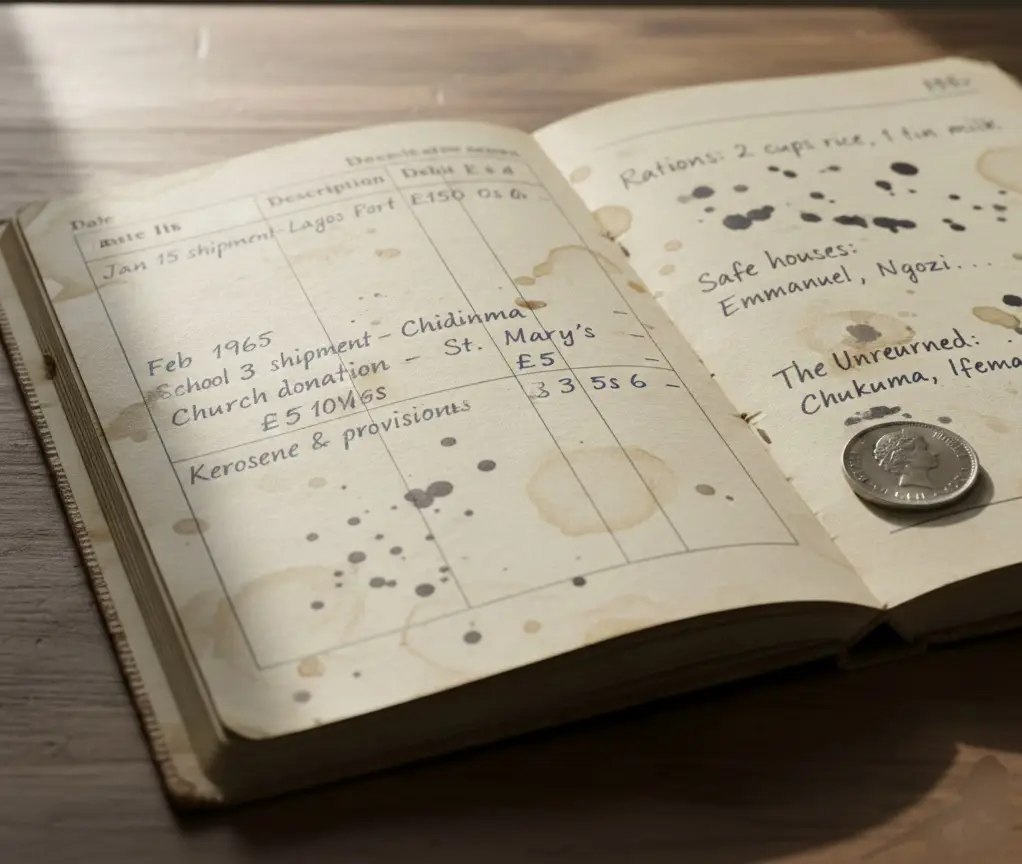
If you have ever finished a novel, an essay, or a testimony and felt that recognition alone was not enough, you are already near the question of what is speculative repair. To name harm matters. To archive loss matters. But there comes a point when witness asks for more than accuracy. It asks what kind of future can be built from truth without denying the wound that truth reveals.
What is speculative repair?
Speculative repair is a way of thinking, writing, and imagining that begins with broken histories but refuses to end there. It does not offer false closure. It does not pretend that violence can be neatly reversed, or that memory can be purified into something painless. Instead, it asks what forms of life, relation, and political possibility become imaginable once we take historical injury seriously.
The phrase holds two commitments together. The first is repair – the labor of mending what has been damaged in public and private life, whether that damage comes from war, colonialism, displacement, state neglect, or inherited silence. The second is speculative – not in the sense of fantasy detached from reality, but in the sense of disciplined imagination. It is the practice of asking what justice could look like when the available institutions, languages, and archives have proven insufficient.
This is why speculative repair belongs so naturally to literature. Fiction can stage moral complexity where official narratives prefer simplification. Essays can connect buried memory to civic life. Storytelling can carry grief, contradiction, and longing without flattening them into slogans. Where policy often asks what is feasible, literature can ask what has not yet been made thinkable.
Why speculative repair matters now
Many societies live inside unfinished history. The violence may be decades old, but its consequences remain current – in family stories interrupted by fear, in public memory shaped by denial, in institutions built on exclusion, in everyday habits of mistrust. Time passes. The wound changes form. It does not disappear.
That is where speculative repair becomes useful as more than a phrase. It gives us a framework for understanding that remembrance alone is not the endpoint of historical work. A people can remember and still remain trapped inside the emotional architecture of loss. A nation can acknowledge atrocity and still refuse transformation. Repair asks for structural and relational change. The speculative dimension asks how to imagine that change before it becomes ordinary language.
For readers concerned with African histories and futures, this framework is especially resonant. So much of the public conversation about Africa is still organized by extraction, emergency, and spectacle. Even when the subject is suffering, the telling is often shallow. Speculative repair pushes against that shallowness. It insists that African narratives are not only records of injury but sites of thought, invention, and political imagination.
Speculation is not escapism
A common misunderstanding is that the speculative must be evasive, as if imagining otherwise means abandoning the world as it is. But serious speculative thinking does the opposite. It looks harder at reality because it knows the present has been made, and what has been made can be remade.
In literary terms, this may mean reworking the boundaries between memory and futurity. A novel might return to civil war not simply to reconstruct events but to ask what inherited grief does to a generation born after the battlefield. An essay might begin with family silence and move toward a theory of public repair. A community of readers might gather not merely to consume content but to test language for a different kind of belonging.
Speculative repair, then, is not the fantasy of easy healing. It is an ethics of imagination under historical pressure. It asks us to think beyond fatalism without surrendering rigor.
What repair means when the damage is historical
Repair can sound too gentle for the scale of the injuries many communities carry. It may seem too domestic a word for catastrophe. Yet that tension is part of its value. Repair suggests ongoing work rather than a single redemptive act. It is local and collective. It happens in institutions, but also in stories, classrooms, rituals, archives, and ordinary speech.
When the damage is historical, repair cannot mean restoration to some pure earlier state. History offers no untouched beginning to which we can return. Cultures change. Languages fracture. The dead do not come back. In that sense, repair is always partial.
But partial does not mean meaningless. A repaired society is not a perfect society. It is one that has developed practices for telling the truth, distributing dignity more justly, and making room for those who were once rendered disposable. Sometimes repair looks like restitution or formal acknowledgment. Sometimes it looks like rewriting the story a nation tells about itself. Sometimes it begins on the scale of a family, where one generation finally names what another could only carry.
The role of literature in speculative repair
Literature cannot replace policy, legal reform, or material redress. It cannot substitute for reparations, accountability, or institutional change. Still, it can do something those tools often cannot. It can create the interior conditions in which repair becomes imaginable and morally urgent.
A novel gives us access to consciousness, to ambivalence, to the unstable terrain between survival and complicity. An essay can braid history and feeling in a way that public discourse rarely permits. Poetry can compress grief into language that endures. These forms matter because damaged worlds are not repaired by information alone. They are repaired, in part, by new habits of attention.
That is one reason the question what is speculative repair belongs as much to readers as to writers. Reading itself can become a civic act when it teaches us to perceive suppressed connections – between personal memory and state violence, between inherited silence and public amnesia, between longing and responsibility.
At Akajiofo Press, the phrase signals not a branding ornament but an invitation into this deeper work: to treat literature as a space where memory and justice meet, and where the future is argued over with seriousness.
What speculative repair is not
It is not optimism for its own sake. It does not ask the wounded to perform hope on command. It does not turn trauma into aesthetic mood, nor does it treat pain as proof of moral depth.
It is also not a guarantee. Imagination can open possibilities, but it does not automatically produce transformation. There is always the risk of symbolic satisfaction without material change. That is why speculative repair must remain accountable to history, community, and consequence.
And it is not politically neutral. Any attempt to repair a world shaped by domination will raise hard questions about power – who gets remembered, who is forgiven, who pays, who narrates, who benefits from closure. A serious practice of repair cannot avoid these questions. It has to live inside them.
How to practice speculative repair as a reader and thinker
You do not need to be a novelist or theorist to participate in this framework. You can begin by reading for more than plot. Ask what injuries a text inherits, what futures it permits, and what forms of relation it proposes. Notice when a story resists official history. Notice when it rehumanizes those rendered marginal or disposable.
You can also practice speculative repair by taking memory seriously in your own life. That may mean listening differently to family stories, revisiting the histories your education minimized, or refusing narratives that make violence look inevitable. The point is not to become consumed by the past. It is to understand that a livable future requires more than forgetting.
There is, too, a communal dimension. Reading with others, writing in public, supporting independent literary spaces, and joining conversations that link art to justice are all part of the work. Repair rarely happens in isolation. Even imagination needs company.
Why this language endures
The endurance of the phrase lies in its honesty. It does not promise that history can be undone. It does not flatter us with innocence. What it offers instead is harder and more sustaining: a language for staying with brokenness while refusing to make a home inside it.
To ask what is speculative repair is really to ask whether memory can become more than mourning, whether storytelling can become more than witness, and whether futures shaped by justice can be imagined before they are secured. That question has no final answer. It has to be returned to, revised, and lived.
Perhaps that is the most hopeful thing about it. Repair is not a finished state waiting somewhere ahead of us. It is a practice of attention, invention, and moral courage carried out under imperfect conditions. And sometimes the first sign that repair has begun is simply this: we have found language equal to what history asked us to remember, and brave enough to ask what else might still be possible.