Why a Ledger? The Origin of the Central Metaphor
January 29, 2026 • Writing Process • 4 minute read


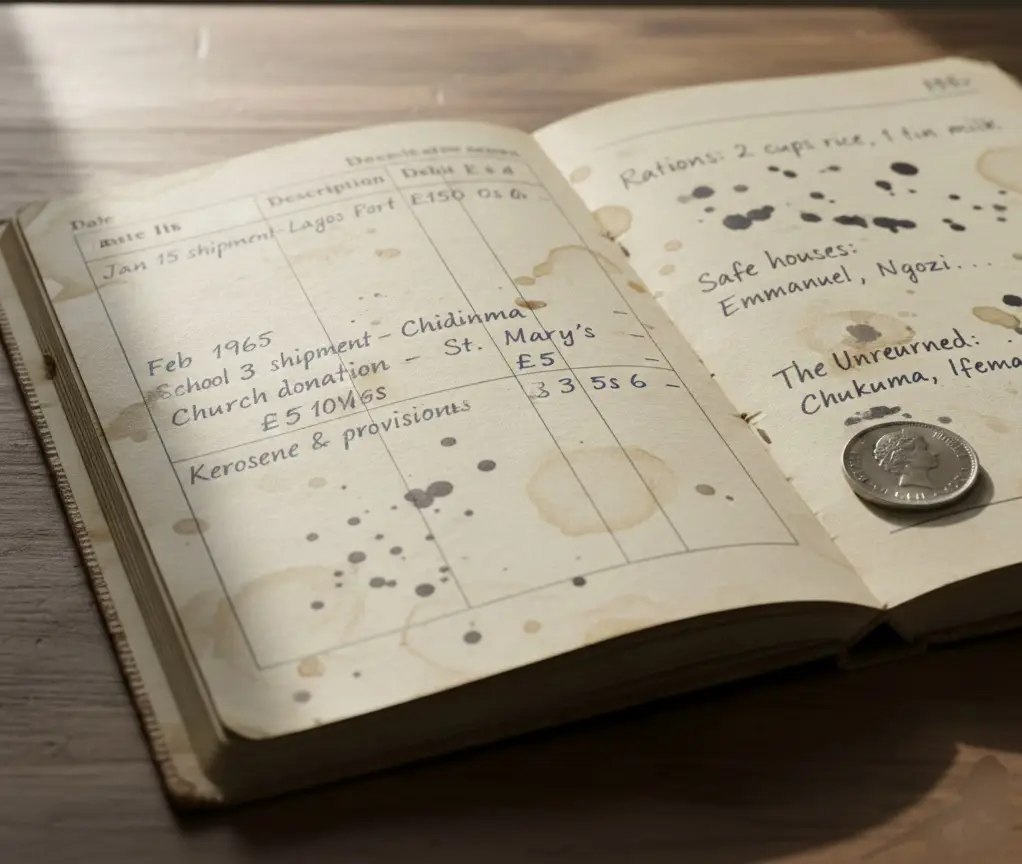
✱Actual 1964 Nigerian florin
Behind This Image
This ledger represents the novel’s central metaphor: documents that begin as tools of order become repositories of memory. Notice the transition from neat columns to urgent handwriting—a visual representation of history interrupting ordinary life.
Research reference for “THE CITY HE NEVER RETURNED TO.” Such documents often survived when little else did.
When people ask what my novel is about, I say: “It’s about a ledger.” The response is usually a puzzled look. In our digital age, ledgers seem antiquated—relics of accounting past. But that’s precisely why I chose one.
The Discovery
While researching family histories from the 1960s, I encountered actual ledgers that had survived displacement. What struck me wasn’t the financial records, but the evolution of their purpose. Page by page, they transformed:
- From recording profits and losses
- To tracking rations during crisis
- To listing names of the missing
- Finally becoming sacred texts of memory
More Than Numbers
A ledger is a promise of order in chaos. In THE CITY HE NEVER RETURNED TO, Okechukwu believes his meticulous records can protect his family. He’s both right and terribly wrong. The ledger does protect—but not in the way he expects.
“Some wounds are passports. Some ledgers are maps.” This line from the book captures what I came to understand: documents meant for one purpose can become something entirely different in history’s hands.
Why This Matters Now
In an era of digital ephemera, we’ve lost the physicality of records. A ledger has weight. It yellows. Its pages hold the oil from fingers that turned them decades ago. It’s a tangible connection to choices made under pressure.
As Nigeria continues to navigate historical memory and national healing, I believe we need to pay attention to our ledgers—both literal and metaphorical. What are we recording? What are we choosing to remember? More importantly, what might future generations need those records to become?

“THE CITY HE NEVER RETURNED TO” takes an unexpected turn in this special edition. Described as “A story of time, funny, and larger,” this version by HEARTYFALL CHANNEL CREAM explores memory through a different lens—one that intertwines temporality, unexpected humor, and expansive perspective.
What happens when a serious story meets a touch of the unexpected? How does humor change our relationship with loss and memory?
Experience this unique literary approach
Discover why “funny” can be profound in context
Explore what “larger” truly means in storytelling
Ready for a narrative that defies expectations?
Unlock Your Potential – Get This Special Edition
AKAJIOFO.COM
Ibekwe Paul Chukwuemeka
Author of THE CITY HE NEVER RETURNED TO, a novel exploring how personal records become national conscience through one family’s journey from 1965 Lagos to present-day Nigeria.
Your Experience?
Have you encountered family documents that revealed unexpected histories? How do you think physical records differ from digital ones in how they preserve memory? Share your thoughts in the comments to Continue the conversation or join the waitlist to be part of this novel’s journey from the beginning.
Leave a Reply