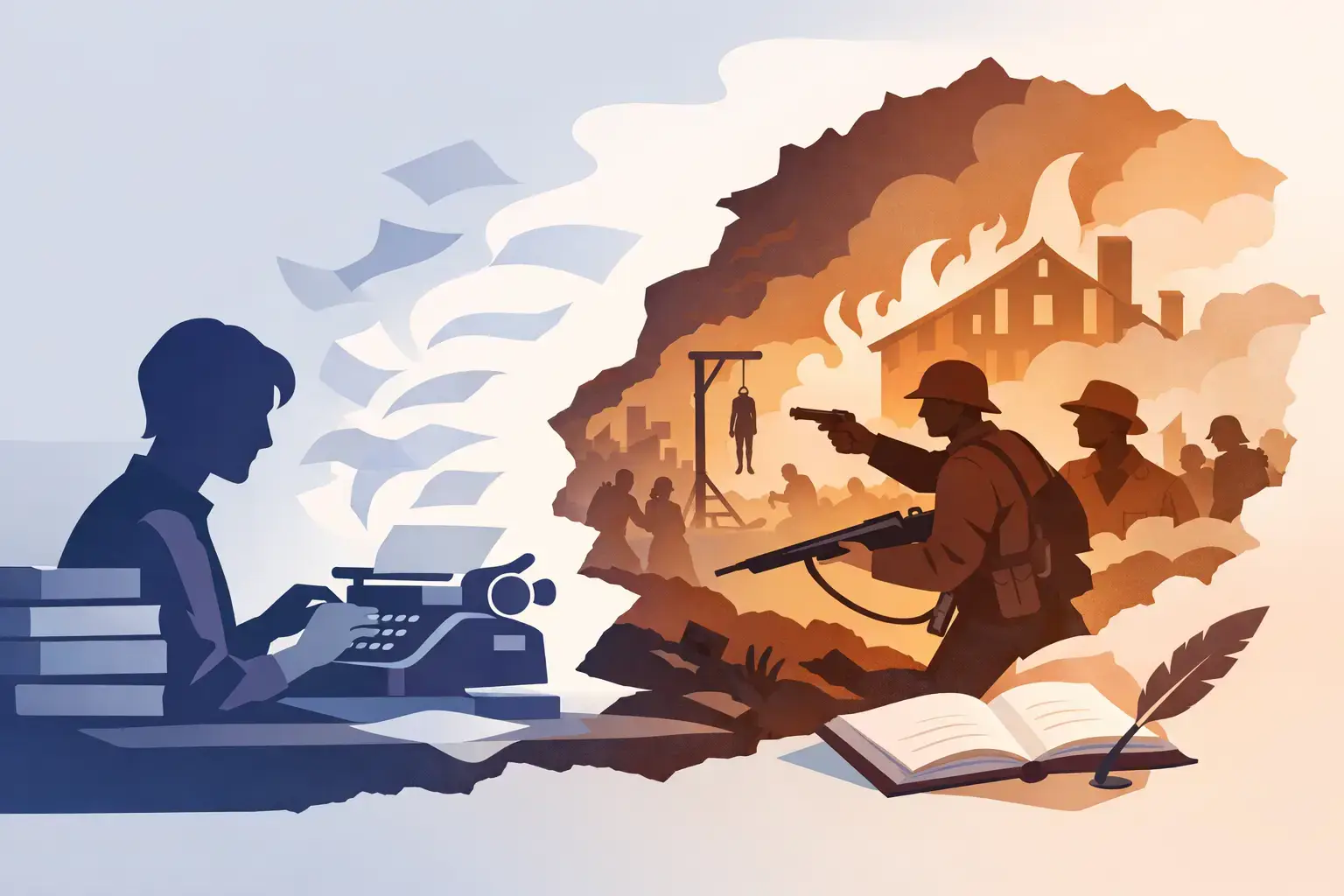
– THE PREVENTABLE CATASTROPHE
THE FACTS (What Actually Happened)
THE ROAD TO WAR (1960–1966)
Nigeria began its independence in 1960 as a fragile federation of three regions:North, East, and West. Each region had its own constitution, civil service,judiciary, and treasury. This was real federalism – not the decorative versionwe have today.
But the cracks appeared immediately:
– 1962: Western Region crisis – rigged election, federal takeover, imprisonment of opposition leader Obafemi Awolowo. The center learned it could use force to settle regional disputes.
– 1963: Census fraud. The Northern Region inflated its population to claim a majority in parliament. The East and West protested. The center ignored them.
– 1964: Federal election rigged. The opposition boycotted. Democracy died before it had teeth.
– January 1966: First military coup. Mostly Igbo officers struck, killing northern leaders including the Prime Minister. General Aguiyi‑Ironsi (an Igbo) took power.
– May 1966: Ironsi abolished the regions with Decree No. 34. He created a unitary system – exactly what the North had always feared: a strong center controlled by an Igbo president.
– July 1966: Northern officers counter‑coup. Ironsi was killed. General Yakubu Gowon (a Christian from the middle belt) took power. The North had seized back control.
– September – October 1966: Northern massacres of Igbos. Thousands were killedin cities like Kano, Kaduna, and Jos. Igbos fled east in droves – traumatised, angry, and carrying proof of bodies.
THE DECLARATION OF BIAFRA (30 May 1967)
Lieutenant‑Colonel Odumegwu Ojukwu, the military governor of the Eastern Region,declared the secession of the Republic of Biafra. His reasons were simple:
– The federal government had failed to protect Igbos from massacres.
– The unitary system imposed by Gowon gave the North permanent control over the East’s oil wealth.
– Negotiations had collapsed – Gowon refused to allow a confederation.
Nigeria’s response: blockade, then war.
THE WAR (6 July 1967 – 15 January 1970)
– 2 to 3 million Biafran civilians died – mostly children, mostly starvation.
– The federal government imposed a total blockade. No food, no medicine, no humanitarian aid without federal approval (which rarely came).
– Starvation became a weapon. Kwashiorkor and malnutritrition became household words.
– Foreign powers (UK, Soviet Union) supported Nigeria. France, Portugal, and Israel gave limited support to Biafra. The US stayed neutral.
– World media broadcast images of starving Biafran children with swollen bellies and orange hair. The term “genocide” entered the global conversation.
– Nigeria recaptured Biafran oil wells (Port Harcourt, Bonny) within months. Without oil revenue, Biafra could not buy weapons or food.
– Biafran soldiers fought with captured weapons, empty stomachs, and relentless courage. They lost.
THE SURRENDER (15 January 1970)
Ojukwu fled to Ivory Coast. His deputy, Philip Effiong, surrendered to GeneralGowon. Gowon’s famous words: “No victor, no vanquished.” Then he announced:- No trials for Biafran leaders.- No formal investigation into the massacres or the starvation.- An “Abandoned Property” policy – property owned by Igbos outside the East was confiscated and redistributed.- All bank accounts frozen during the war were settled at a flat rate of £20, regardless of the original balance.The war ended. The wounds never closed.
THE VERDICT:
The Biafran war was not inevitable. It was manufactured by a series of politicalfailures, broken promises, and the refusal of Nigeria’s elite to build a countrywhere every ethnic group felt safe.The federal government did not just defeat Biafra. It starved children to makea point. The blockade was a war crime.And after the war, Nigeria did not heal. It swept everything under a rug called”no victor, no vanquished.” The survivors were told to forget. The dead werecounted only in approximation. The £20 settlement told every Igbo family thattheir pre‑war wealth, their businesses, their savings – all of it was worthless.That wound is still open. It is the wound that The City He Never Returned To tries to stitch, page by page.
🔁 WHAT COULD HAVE BEEN (If Nigeria Had Chosen Different)
THE COUNTERFACTUAL:
Imagine that after the January 1966 coup, Ironsi had not abolished the regions.Instead, he had:- Convened a constitutional conference with all ethnic leaders.- Kept the three regions as powerful, autonomous units.- Implemented a rotating presidency – each region takes a turn.- Created a judicial commission to investigate the January coup transparently.- Called for new, free elections within 18 months.Imagine that after the July 1966 counter‑coup, Gowon had not imposed a unitarystate. Instead, he had:- Acknowledged the massacres publicly and prosecuted the killers.- Offered financial compensation and safe passage to Igbo families who wanted to return home.- Agreed to a genuine confederation – Biafra could exist as a loose economic partner while Nigeria retained defense and currency.- Opened negotiations without a blockade. Let oil revenues be shared fairly.
WHAT WOULD HAVE HAPPENED?
No war. Or a much shorter, less deadly confrontation.
– The East would have stayed in Nigeria – because it would have had no reason to leave.
– The North would have retained its political influence without crushing the East.
– The oil wealth of the Niger Delta would have been shared openly, not captured by federal cronies.
– 2 to 3 million Biafran civilians would have lived. They would have built families, businesses, and futures.
THE HUMAN DIFFERENCE:
Today, a grandmother in Enugu would not have to tell her grandchildren about the smell of corpses on the road to Umuahia. A father in Onitsha would not have to explain why his father’s bank account was reduced to twenty pounds.
Nigeria would not have a “Biafran wound” festering in every political argument about marginalisation, resource control, and structural injustice.
Instead, the country might have learned that federalism is not a threat to unity. It is the only way unity can survive.