
WEEK 13: THE ABACHA YEARS – DICTATORSHIP AND RESISTANCE
📌 THE FACTS (What Actually Happened)
The Annulment: June 12, 1993
The story of the Abacha years begins with the annulment of the June 12, 1993 presidential election—widely considered the freest and fairest election in Nigeria’s history.
– Chief Moshood Kashimawo Olawale (MKO) Abiola, a Yoruba businessman and philanthropist, was the presumed winner.
– The election was annulled by General Ibrahim Babangida’s military government.
– Nigeria was plunged into a political crisis that would define the next decade.
Why This Matters for Our Speculative Repair:
The annulment was a profound betrayal of the democratic will of the Nigerian people. It was not just an election theft. It was a declaration that the people’s voice could be overruled by military might. This wound has never fully healed—and it echoes in the electoral distrust we still see today.
The Military Coup: November 17, 1993
General Sani Abacha seized power, ousting the interim government of Chief Ernest Shonekan.
– Abacha’s rule was brutal, repressive, and centralized.
– All democratic institutions were dismantled.
– Political opposition was crushed.
– Civil liberties were suspended.
The Abacha regime was not just a dictatorship. It was a system designed to make resistance impossible.
The Abiola Arrest and Imprisonment:
MKO Abiola, the presumed winner of the annulled election, declared himself president in 1994.
– He was arrested and imprisoned.
– He remained in detention until his death in 1998—under suspicious circumstances.
– His wife, Kudirat Abiola, was assassinated in 1996 for her role in the pro-democracy movement.
The Death of Kudirat Abiola
Kudirat Abiola was a symbol of resistance. She took up her husband’s cause when he was imprisoned. Her assassination was a message: This regime will not tolerate opposition, even from a woman fighting for her husband’s freedom.
The Pro-Democracy Struggle:
Despite the repression, resistance was fierce and courageous:
– Nigerian Democratic Movement – civil society organisations that pushed for democracy.
– Campaign for Democracy (CD) – one of the leading pro-democracy groups.
– Women’s Movement – Kudirat Abiola and other women were at the forefront.
– National Democratic Coalition (NADECO) – a coalition of pro-democracy activists, including Chief Bola Ige, Chief Gani Fawehinmi, and others.
– The Press – newspapers like The Guardian, The Punch, and The News defied censorship to report on the regime’s abuses.
Many of these activists paid with their freedom, their livelihoods, and their lives.
The 1995 Treason Trial:
In 1995, the Abacha regime arrested and tried 40 people—including prominent Nigerians—on charges of treason.
– The accused included:
– General Olusegun Obasanjo (former Head of State)
– Major General Shehu Musa Yar’Adua
– Others were detained, tortured, or forced into exile.
– The trial was widely condemned as a show trial designed to silence opposition.
Many of those convicted were sentenced to death. International pressure forced Abacha to commute the sentences, but the damage was done. The regime had shown its willingness to kill political opponents.
The Economic Dimension:
Abacha’s regime was also marked by massive corruption:
– The regime was accused of looting billions from the Central Bank of Nigeria.
– Over $2 billion was siphoned out of the country through shady contracts and deals.
– Nigeria’s foreign reserves were depleted.
– Infrastructure crumbled.
– Poverty deepened.
This was not just political repression. It was economic predation. The state was being looted while its citizens were being crushed.
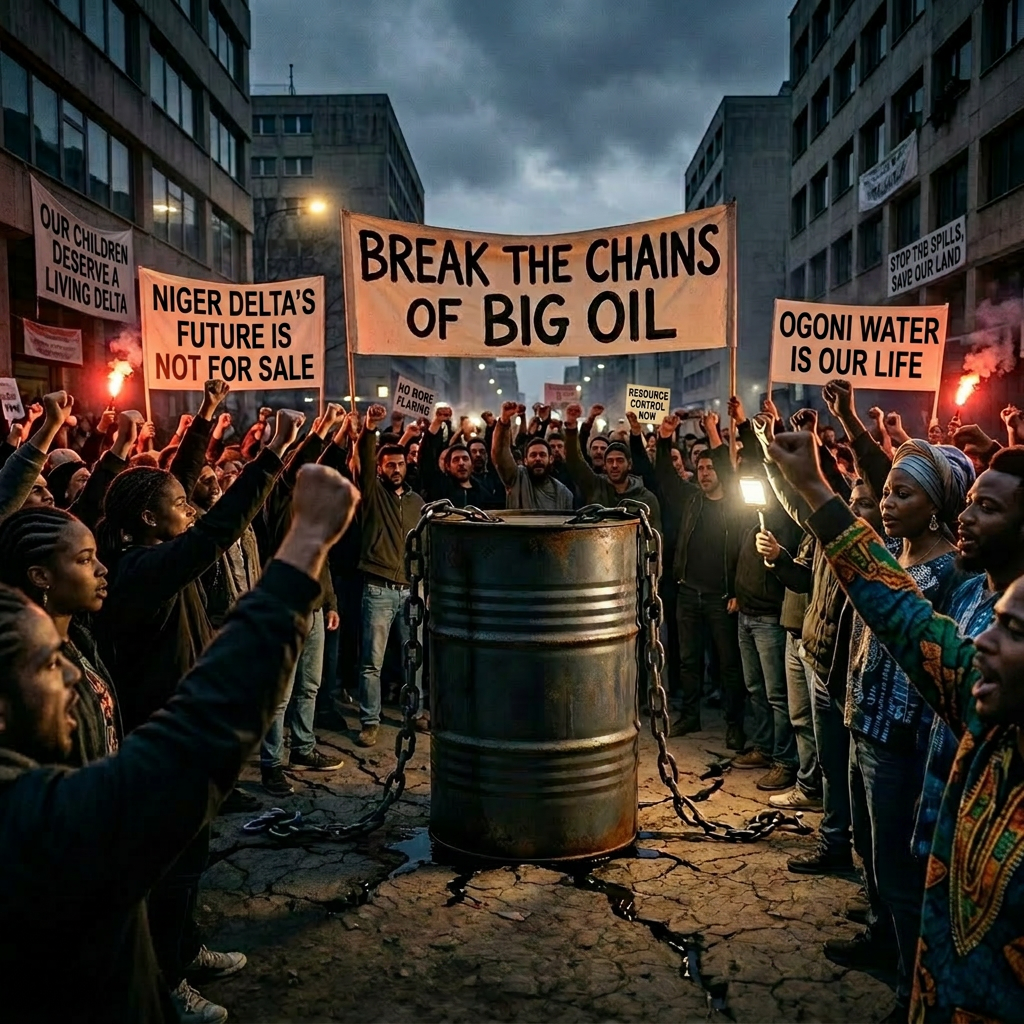
The Ken Saro-Wiwa and Ogoni Nine Executions:
In 1995, the Abacha regime executed writer and environmental activist Ken Saro-Wiwa and eight other Ogoni leaders.
– They had campaigned against the environmental destruction caused by oil companies in the Niger Delta.
– They were arrested, tried by a military tribunal, and executed—all in a matter of weeks.
– The execution sparked international outrage and led to Nigeria’s suspension from the Commonwealth.
Why This Matters for Our Speculative Repair:
Ken Saro-Wiwa’s death was not just a tragedy. It was a warning to anyone who dared to challenge the nexus of military power and oil interests. The Niger Delta remains a wound in our national body—one we have not adequately addressed.
The International Isolation:
By the mid-1990s, Nigeria had become an international pariah.
– Commonwealth suspension.
– European Union sanctions.
– US sanctions.
– Nigerian diplomats were treated with contempt abroad.
Nigeria was isolated, not because of its people, but because of the regime that held them captive.
Abacha’s Death and the Transition:
General Abacha died suddenly on June 8, 1998.
– His death was followed by a rapid transition to civilian rule.
– General Abdulsalami Abubakar took over and oversaw the transition.
– The 1999 Constitution was adopted.
– Nigeria returned to civilian rule on May 29, 1999.
But the transition was incomplete. Abacha’s death and the subsequent transition to civilian rule did not undo the damage:
– The constitution was not rewritten to reflect democratic ideals fully.
– Many of the same political actors remained in power.
– The culture of impunity and corruption persisted.
– The wounds of the Abacha years were papered over, not healed.
The Human Cost:
| Indicator | 1993 | 1998
| :———————–| :————————– | :—————–
| Poverty Rate | ~45% | ~70% |
| Unemployment | ~10% | ~25% |
| Foreign Reserves | $3.5 billion | $1.2 billion |
| External Debt | $28 billion | $33 billion |
| Press Freedom Index | 85/100 (Moderately Free)| 25/100 (Not Free) |
| Political Prisoners | 0 (Official) | Estimated 500+ |
🔁 WHAT COULD HAVE BEEN (If Nigeria Had Chosen Differently)
Imagine that in 1993, the June 12 election had not been annulled. MKO Abiola had been inaugurated as President. Nigeria had transitioned to civilian rule in 1993—on time, not in 1999.
Imagine that Abacha had never seized power. Or imagine that when he did, the international community had acted more decisively. Or imagine that the Nigerian people had been able to mount a successful resistance.
What would have happened?
1. Democracy Would Have Arrived in 1993
– Nigeria would have had a civilian president in 1993—not 1999.
– Six years of democratic governance would have been gained.
– Nigeria would have entered the 21st century as a democracy, not a dictatorship.
2. The Economy Would Have Been Stronger
– Abacha’s looting of the Central Bank would not have happened.
– Over $2 billion would have remained in Nigerian coffers.
– Infrastructure would have been built, not stolen.
3. The Niger Delta Would Have Been Spared
– Ken Saro-Wiwa and the Ogoni Nine would have lived.
– The environmental destruction of the Niger Delta would have been challenged earlier.
– The region would not have become the site of rebellion and environmental devastation.
4. The Culture of Impunity Would Have Been Weakened
– Abacha’s brutality would not have set a precedent.
– The idea that “power protects power” would have been challenged.
– The rule of law would have been strengthened.
5. Nigeria’s International Reputation Would Have Been Restored
– Commonwealth suspension would not have happened.
– EU and US sanctions would not have been imposed.
– Nigeria would have been seen as a democratic leader in Africa.
6. The Nigerian Middle Class Would Not Have Been Destroyed
– The economic collapse of the Abacha years would not have occurred.
– Millions of Nigerians would not have been pushed into poverty.
– The “hustle” would not have become a way of life.
The Human Difference:
Today, a Nigerian family would not have to live in fear of arbitrary arrest. A journalist would not have to self-censor. A citizen would not have to wonder if their vote matters.
Nigeria would not have been known as a country where the state loots its own people. It would have been known as a country that chose democracy over dictatorship—even when it was hard.
📌 THE LESSON FOR TODAY
The Abacha years taught us something important:
Authoritarianism does not die easily. It waits. It adapts. It returns in different forms.
The fight for democracy is not won in one election. It is a permanent struggle.
But they also taught us something else:
Resistance is possible. Courage is possible. Nigerians can stand up to tyranny.
The pro-democracy activists of the 1990s—NADECO, the Campaign for Democracy, the women’s movement, the press—showed us that dictatorship is not invincible. It can be challenged. It can be resisted. It can be defeated.
But the lesson of the Abacha years is also this:
The state is not neutral. The military, the police, the judiciary, the civil service—all can be captured by a dictator. Institutions that are not defended by citizens can be used to oppress citizens.
A country that cannot defend its own democracy cannot have democracy.
The ghosts of Abacha haunt Nigeria today in visible ways:
– The culture of impunity—the sense that power protects its own.
– The weakness of democratic institutions—the belief that democracy is fragile and can be overturned.
– The memory of June 12—a wound that has not healed.
– The economic damage—the looting of public funds that continues to this day.
💬 DISCUSSION QUESTIONS
1. What do you remember about the Abacha years? How did they shape you or your family?
2. Was Abacha’s death a moment of relief or a moment of unresolved justice?
3. What would Nigeria look like today if June 12 had not been annulled?
4. Can justice still be done for the victims of the Abacha years—or is it too late?
5. What institutions need to be strengthened to prevent another Abacha?
6. What does repair look like for that period—truth commission, reparations, memorials?
NEXT WEEK: Week 14 – The 1999 Constitution (Promise or Betrayal?)
We will examine Nigeria’s current constitution—the document that governs us today.
– Was it a genuine attempt at democratic renewal?
– Or was it a compromise that entrenched the same structures of power that enabled Abacha?
The conversation continues.
Share Your Thoughts
I would love to hear your reflections. Reply here or message me privately.
With you,
Ibekwe Paul Chukwuemeka
Akajiofo Press
Leave a Reply